
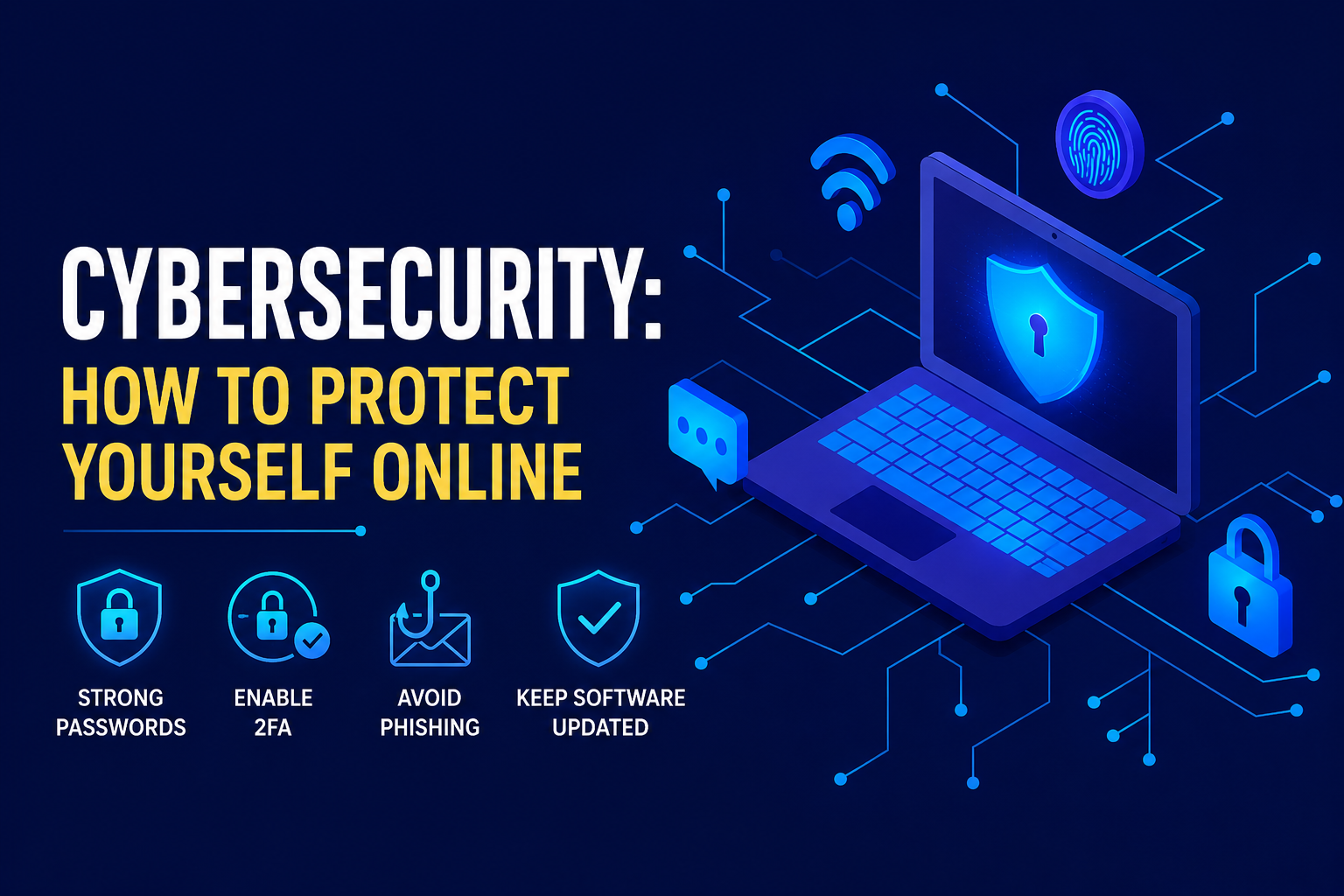

As India rapidly becomes a digital-first nation, cybersecurity is no longer just an IT concern — it has become a daily necessity for every smartphone user, online shopper, UPI user, student, professional, and business owner.
From UPI scams and phishing attacks to fake job offers, Aadhaar frauds, WhatsApp hacking, and “digital arrest” scams, cybercriminals are finding smarter ways to target Indian users every day. According to India’s national cybersecurity agency CERT-In, millions of cyber incidents are reported annually across banking, payments, government services, and personal devices.
Whether you use Google Pay, PhonePe, Paytm, Instagram, WhatsApp, online banking, or shopping websites, understanding cybersecurity basics can help protect your money, identity, and personal information.
Why Cybersecurity Matters More in India
India has witnessed explosive growth in:
- UPI transactions
- Online banking
- Digital wallets
- Aadhaar-linked services
- E-commerce
- Remote work
- AI-powered digital platforms
With this growth, cyber frauds have also increased rapidly.
Cybercriminals now target:
- UPI users
- Senior citizens
- Students
- Freelancers
- Small businesses
- Social media creators
- Online shoppers
CERT-In and RBI advisories regularly warn citizens about phishing attacks, fake links, malware, Aadhaar scams, SIM-swap frauds, and social engineering attacks.
Most Common Cyber Threats in India
1. UPI Fraud and Fake Payment Scams
UPI has transformed digital payments in India, but it has also become one of the biggest targets for scammers.
Common UPI Scams
- Fake payment screenshots
- “Collect request” frauds
- QR code scams
- Fake customer care numbers
- Refund scams
- Screen-sharing app scams
Important Rule
Receiving money never requires entering your UPI PIN.
If someone asks you to:
- enter your PIN,
- approve a collect request,
- or scan a QR code to receive money,
it is most likely a scam.
RBI and banking advisories continue warning users about fake investment and payment websites impersonating banks and UPI services.
2. Phishing Attacks
Phishing is one of the most dangerous cyber threats in India today.
Scammers send:
- Fake emails
- WhatsApp messages
- SMS links
- Fake banking alerts
- Fake KYC requests
These messages often create urgency like:
- “Your bank account will be blocked”
- “Update PAN immediately”
- “KYC verification pending”
- “Income Tax refund available”
CERT-In identifies phishing as one of the most common forms of cyber fraud targeting Indian citizens.
3. Digital Arrest Scams
One of the fastest-growing scams in India is the “Digital Arrest” scam.
Fraudsters pretend to be:
- Police officers
- CBI officials
- RBI officers
- TRAI authorities
- Customs officers
Victims are falsely accused of:
- Money laundering
- Illegal SIM usage
- Drug trafficking
- Aadhaar misuse
The scammers then demand money transfers for “verification” or “security clearance.”
SBI and multiple cyber agencies have issued alerts regarding these scams.
Important:
No Indian government agency conducts “digital arrests” over video calls.
4. Aadhaar and PAN Card Fraud
Cybercriminals frequently misuse Aadhaar and PAN details for:
- Fake SIM cards
- Fraud bank accounts
- Loan frauds
- Identity theft
Recent phishing scams involving fake “PAN 2.0” upgrades targeted Indian taxpayers through fraudulent emails and websites.
Safety Tips
- Never share Aadhaar on WhatsApp
- Blur unnecessary Aadhaar digits
- Avoid uploading documents on unknown websites
- Use masked Aadhaar whenever possible
5. WhatsApp Hacking and OTP Fraud
WhatsApp account takeovers are increasing rapidly in India.
Scammers may:
- Ask for OTPs
- Send fake verification links
- Use device-pairing scams
- Impersonate friends or relatives
CERT-In recently warned about campaigns exploiting WhatsApp’s linking features to hijack accounts.
Protection Tips
- Enable two-step verification
- Never share OTPs
- Avoid unknown APK downloads
- Check linked devices regularly
How to Protect Yourself Online
Use Strong Passwords
Avoid:
- 123456
- Password123
- Your birthday
- Mobile number
Instead:
- Use long passwords
- Combine letters, numbers, and symbols
- Use different passwords for every platform
Password managers can help securely store passwords.
Enable Two-Factor Authentication (2FA)
2FA adds an extra security layer beyond passwords.
Enable it for:
- Gmail
- Banking apps
- UPI apps
Even if hackers steal your password, they still need the second verification step.
Never Share OTPs or PINs
No bank, RBI official, police officer, or customer care executive will ask for:
- OTP
- ATM PIN
- CVV
- UPI PIN
- Net banking password
If someone asks for these details, it is a fraud attempt.
Avoid Public Wi-Fi for Banking
Public Wi-Fi at:
- Cafes
- Airports
- Hotels
- Railway stations
can expose your sensitive data.
Avoid:
- Banking
- UPI transactions
- Password logins
- Financial transfers
on unsecured public networks.
Keep Apps and Devices Updated
Updates often contain security patches.
Always update:
- Android/iPhone software
- Banking apps
- Browsers
- Antivirus software
Outdated apps are easier to hack.
Verify Links Before Clicking
Before clicking:
- Check spelling carefully
- Look for HTTPS
- Avoid suspicious shortened links
- Verify domains manually
One fake link can:
- steal passwords,
- install malware,
- or empty bank accounts.
Cyber advisories repeatedly warn users against fake links circulating through SMS, email, and WhatsApp.
Social Media Safety Tips
Social media scams are growing rapidly.
Avoid:
- Sharing personal documents publicly
- Accepting unknown friend requests
- Clicking giveaway links
- Downloading suspicious files
Protect:
- Instagram accounts
- YouTube channels
- Facebook profiles
- Creator pages
using strong passwords and 2FA.
Cybersecurity Tips for Indian Businesses
Small businesses and startups are increasingly targeted by cybercriminals.
Businesses Should:
- Train employees about phishing
- Use secure cloud backups
- Install firewalls
- Restrict admin access
- Conduct regular security audits
- Secure customer payment systems
India’s cybersecurity ecosystem is rapidly strengthening through CERT-In audits, awareness programs, and cyber preparedness exercises.
What To Do If You Become a Victim
If you suspect cyber fraud:
Immediately:
- Block bank accounts/cards
- Change passwords
- Disconnect suspicious apps
- Inform your bank
- Report the fraud quickly
Indian Cybercrime Helpline
Call: 1930
Official Portal
National Cyber Crime Reporting Portal
Quick reporting significantly improves chances of freezing stolen funds.
Future of Cybersecurity in India
India’s digital economy is expanding rapidly with:
- AI
- Digital payments
- Smart devices
- Cloud services
- Online education
- E-commerce
At the same time, cyber threats are becoming more advanced using:
- AI-generated phishing
- Deepfakes
- Voice cloning
- Fake KYC systems
- Identity theft
Reports indicate that AI-powered scams are becoming increasingly sophisticated globally and in India.
Final Thoughts
Cybersecurity is no longer optional in India’s digital era.
Every smartphone user should understand:
- How scams work
- How phishing attacks happen
- How to protect UPI accounts
- How to secure social media
- How to recognize fake links
Simple habits like enabling 2FA, avoiding suspicious links, using strong passwords, and never sharing OTPs can protect you from major financial and identity theft risks.
As India continues moving toward a fully digital future, cyber awareness will become one of the most important life skills for everyone.