
Artificial Intelligence is no longer a futuristic concept shown only in science-fiction movies. In 2026, AI has become part of our everyday lives. From smartphones and smart assistants to online shopping recommendations and self-driving technology, AI is changing how people work, communicate, learn, and earn.
If you have ever used ChatGPT, Google Gemini, Siri, Netflix recommendations, or even spam filters in your email, then you have already interacted with AI.
But what exactly is AI? How does it work? Is it dangerous? Can beginners learn AI without coding?
In this beginner-friendly guide, we will explain Artificial Intelligence in simple language so anyone can understand it.
What is AI?
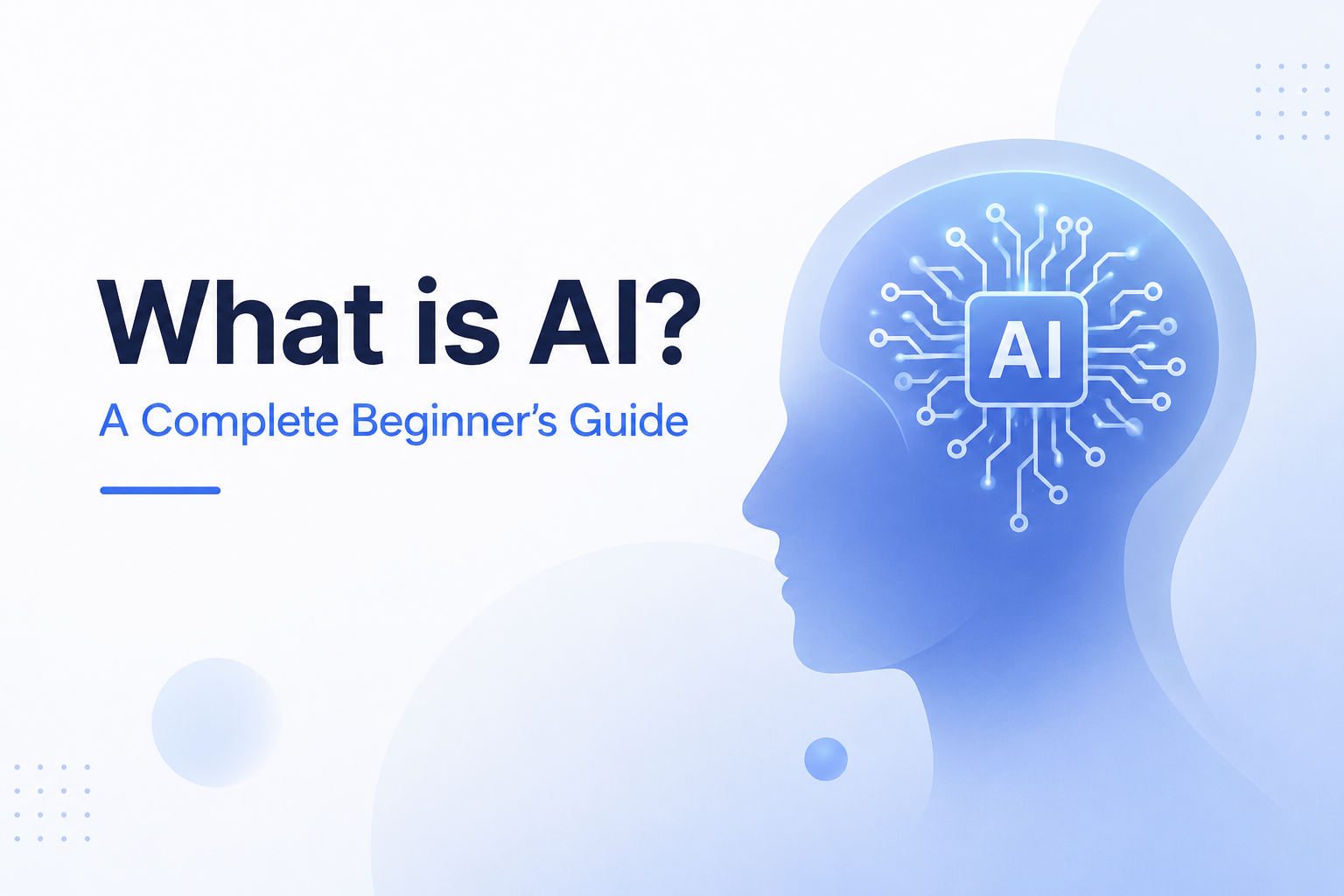
Artificial Intelligence, commonly known as AI, is a technology that allows machines and software to perform tasks that normally require human intelligence.
These tasks include:
- Understanding language
- Recognizing images
- Solving problems
- Learning from data
- Making decisions
- Predicting outcomes
In simple words, AI helps machines “think” and “learn” like humans.
For example:
- Chatbots answer customer questions.
- Google Maps finds the fastest route.
- YouTube recommends videos based on your interests.
- Face unlock on smartphones recognizes your face.
All these systems use AI.
AI works by analyzing large amounts of data and identifying patterns. The more data AI receives, the smarter and more accurate it becomes.
How Does AI Work?
Many beginners think AI is magic, but it is actually based on data, algorithms, and learning systems.
Here is a simple explanation of how AI works:
1. Data Collection
AI systems need data to learn.
For example:
- Images for image recognition
- Text for chatbots
- Voice recordings for speech assistants
- User behavior for recommendations
The quality of data directly affects the performance of AI.
2. Machine Learning
Machine Learning (ML) is a branch of AI where machines learn from data instead of being manually programmed for every task.
For instance, if an AI system is shown thousands of cat images, it learns how cats look and later identifies cats in new images.
3. Algorithms
Algorithms are sets of instructions that help AI process information and make decisions.
Different AI models use different algorithms depending on the task.
4. Training and Improvement
AI systems improve over time through training.
The more examples and feedback they receive, the better they perform.
This is why tools like ChatGPT keep improving.
Types of Artificial Intelligence
AI can be divided into different categories based on capabilities.
1. Narrow AI
Narrow AI is designed for a specific task.
Examples include:
- Voice assistants
- Recommendation systems
- AI chatbots
- Translation apps
Most AI tools we use today fall under Narrow AI.
2. General AI
General AI refers to machines that can think and perform tasks like humans across multiple areas.
This type of AI is still under development and does not fully exist yet.
3. Super AI
Super AI is a theoretical concept where AI becomes more intelligent than humans.
This idea is often discussed in movies and future technology debates.
Real-Life Examples of AI
AI is now used in almost every industry.
Here are some practical examples of AI that people use daily.
AI in Smartphones
Modern smartphones use AI for:
- Camera enhancements
- Voice assistants
- Battery optimization
- Face recognition
- Real-time translation
AI in Healthcare
Doctors and hospitals use AI to:
- Detect diseases
- Analyze medical reports
- Assist in surgeries
- Monitor patient health
AI helps improve speed and accuracy in healthcare.
AI in Finance
Banks and finance apps use AI for:
- Fraud detection
- Credit score analysis
- Investment predictions
- Customer support chatbots
AI in Education
AI-powered learning platforms personalize education based on student performance.
Students can now learn through AI tutors and smart educational apps.
AI in Content Creation
Creators use AI tools for:
- Writing blog posts
- Editing videos
- Generating images
- Designing graphics
- Creating social media captions
This has significantly improved productivity for businesses and freelancers.
Benefits of AI
Artificial Intelligence offers several advantages across industries.
1. Saves Time
AI automates repetitive tasks, helping people focus on more important work.
2. Improves Productivity
Businesses can complete tasks faster using AI-powered tools.
3. Better Decision Making
AI analyzes data quickly and provides insights that help businesses make smarter decisions.
4. 24/7 Availability
Unlike humans, AI systems can work continuously without breaks.
5. Personalization
AI creates personalized experiences on platforms like Netflix, Spotify, and Amazon.
Risks and Challenges of AI
Although AI offers many benefits, it also comes with concerns.
1. Job Replacement
Many traditional jobs are being automated through AI.
Some industries are experiencing major changes due to automation.
2. Privacy Concerns
AI systems often collect large amounts of user data.
Improper handling of this data can create privacy issues.
3. Fake Content and Deepfakes
AI-generated fake videos and images are becoming more realistic.
This increases the risk of misinformation online.
4. Dependence on Technology
Over-reliance on AI can reduce human creativity and critical thinking.
5. Ethical Concerns
Questions about AI ethics, bias, and fairness are becoming increasingly important.
Governments and companies are now working on AI regulations.
AI vs Human Intelligence
Many people wonder whether AI can replace humans completely.
The answer is not simple.
AI is excellent at:
- Processing huge amounts of data
- Repeating tasks accurately
- Working continuously
- Finding patterns quickly
However, humans are still better at:
- Emotional understanding
- Creativity
- Critical thinking
- Moral judgment
- Human relationships
AI is more likely to assist humans rather than completely replace them.
The future will involve humans and AI working together.
Popular AI Tools
AI tools have become more accessible than ever.
Here are some popular AI tools used in 2026:
ChatGPT
ChatGPT helps users write content, answer questions, brainstorm ideas, and automate tasks.
Google Gemini
Gemini is Google’s advanced AI assistant integrated into many Google products.
Midjourney
Midjourney generates AI artwork and creative images from text prompts.
Canva AI
Canva AI helps users design graphics, presentations, and social media posts quickly.
Notion AI
Notion AI assists with note-taking, writing, and productivity tasks.
These tools are helping students, freelancers, businesses, and creators save time and improve efficiency.
How Beginners Can Start Learning AI
The good news is that you do not need to be a programmer to start learning AI.
Here are some beginner-friendly ways to start.
Learn AI Basics
Start by understanding:
- What AI is
- How machine learning works
- Basic AI terminology
YouTube videos, blogs, and beginner courses are great starting points.
Use AI Tools Daily
The easiest way to understand AI is by using it.
Try tools like:
- ChatGPT
- Google Gemini
- Canva AI
- Grammarly AI
Experimenting with these tools builds confidence.
Learn Prompt Writing
Prompt writing means giving clear instructions to AI tools.
Good prompts help AI generate better results.
This skill is becoming highly valuable in 2026.
Take Online Courses
Platforms like Coursera, Udemy, and Google offer beginner-friendly AI courses.
Many courses are free.
Stay Updated
AI evolves rapidly.
Follow tech blogs, YouTube channels, and AI news to stay informed about new trends.
Future of AI in 2026 and Beyond
AI is expected to grow even faster in the coming years.
Experts believe AI will continue transforming industries such as:
- Healthcare
- Education
- Finance
- Marketing
- Software development
- Transportation
Future AI systems may become more personalized, intelligent, and integrated into daily life.
Businesses are increasingly adopting AI to improve customer experiences and reduce costs.
At the same time, governments worldwide are working on AI laws and ethical guidelines to ensure safe usage.
For students and professionals, learning AI-related skills could create massive career opportunities in the future.
Final Thoughts
Artificial Intelligence is one of the biggest technological revolutions of our time.
In 2026, AI is no longer limited to large tech companies. It is now accessible to students, freelancers, small businesses, creators, and everyday users.
Understanding what AI is and how it works is becoming an essential digital skill.
The best part is that anyone can start learning AI today, even without technical knowledge.
Whether you want to improve productivity, grow a business, create content, or build a future-proof career, AI offers endless possibilities.
Instead of fearing AI, the smarter approach is to learn how to use it effectively.
The future belongs to people who can work alongside AI, not against it.
Key Takeaway
AI is transforming the world rapidly, and beginners who start learning today will have a major advantage tomorrow. By understanding the basics of Artificial Intelligence, using modern AI tools, and staying updated with technology trends, anyone can benefit from the AI revolution in 2026 and beyond.