
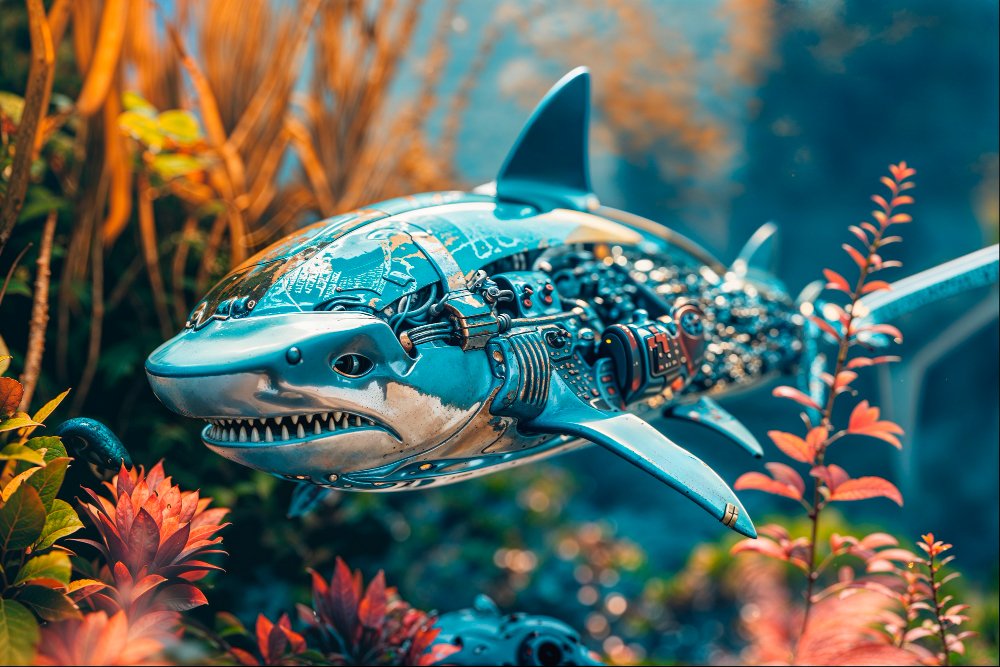
In recent months, “robo fish” have captured headlines for their growing impact on environmental protection, scientific research, and pollution control in aquatic ecosystems. Here’s an up-to-date overview of how these robotic marvels are making waves around the globe.
Robotic fish, designed to mimic the natural movements and behaviors of their biological counterparts, are revolutionizing the way we approach environmental conservation. These innovative solutions not only serve practical purposes but also spark immense public interest and engagement in marine ecosystems. With their ability to interact seamlessly with the environment, they are paving the way for future advancements in technology-driven conservation efforts.
The potential applications of RoboFish extend far beyond fishing deterrents. For example, their capabilities can also be utilized in monitoring fish populations, tracking migratory patterns, and assessing the health of aquatic habitats. This data is invaluable for scientists and conservationists alike, enabling them to make informed decisions to protect marine biodiversity.
Furthermore, RoboFish can also act as a deterrent beyond just fishing lines; they can interact with various marine life to prevent bycatch, which is the capture of unintended species in fishing practices. This humane intervention could result in healthier ecosystems and more sustainable fishing practices. The advances in AI technology integrated into these robotic fish ensure that they can learn from their environments and adapt over time, making each deployment more effective.
Moreover, the collaboration between technology and marine biology is evident in Taddy’s design. By using electroactive polymer muscles, Taddy not only replicates the swimming motion of natural fish but also operates quietly, reducing the stress on marine life during research activities. This innovation opens new avenues for studying sensitive species that are often disturbed by conventional research methods, allowing researchers to gather more accurate data.
Pioneering Protection with RoboFish
In addition to collecting environmental DNA, Eve’s design incorporates advanced filtration systems that can analyze the water quality in real-time. As Eve swims through lakes, it can assess pollutants and provide critical information regarding the health of aquatic environments, ensuring that scientists can respond effectively to emerging threats such as toxic algal blooms or industrial discharges.
Earlier this year, PETA took a bold step towards marine conservation by rolling out RoboFish across the nation. These AI-powered robots patrol fishing hotspots, using sonar and image recognition to locate and cut fishing lines—a humane way to safeguard marine animals from entanglement. Each RoboFish is solar-powered and operates autonomously, offering an ethical alternative to traditional fishing deterrents. Future models may even help free lobsters and other trapped marine life.
Taddy: The Smart Robot Fish from New Zealand
With the growing concern over plastic pollution, robotic fish represent a proactive approach to addressing environmental challenges. By ingesting microplastics, these innovations not only clean up polluted habitats but also educate the public about the importance of reducing plastic waste. As these technologies evolve, they can lead to large-scale clean-up operations, restoring ecosystems to their natural states.
April 2025 saw the debut of “Taddy,” a robotic fish developed by the Auckland Bioengineering Institute. Utilizing electroactive polymer artificial muscles, Taddy swims quietly and naturally among real fish, allowing researchers to study aquatic life with minimal disruption. By incorporating advanced sensors, Taddy can detect water currents and adapt its movements, making it a valuable tool for both observation and data collection in fragile environments.
As robotic fish become more prevalent in marine research, we can expect to see drastic improvements in our understanding of aquatic ecosystems. Their use in bioremediation, monitoring fish health, and identifying environmental changes will allow for timely interventions that protect marine life. Future developments could involve enhanced communication systems that enable fleets of robotic fish to collaborate, providing a comprehensive view of underwater environments.
Eve: Swimming for Science in Switzerland
In conclusion, the robotic fish revolution represents a crucial leap forward in our efforts to monitor and conserve marine ecosystems. As advancements continue, we can expect a future where technology and nature work hand in hand, ensuring the preservation of our most vital resources. The integration of such innovative tools in conservation efforts stands to enhance our understanding and protection of aquatic environments on a global scale.
A Swiss student team recently launched “Eve,” a biomimetic robot fish designed to collect environmental DNA from freshwater lakes. By resembling and moving like a real fish, Eve reduces disturbance to local wildlife while gathering essential data for biodiversity research. This approach allows scientists to monitor ecosystem health efficiently and ethically.
Battling Pollution: Robotic Fish Against Microplastics
Major breakthroughs have also emerged in the fight against water pollution. UK researchers unveiled a robotic fish that can identify and ingest microplastics from rivers and lakes. Similarly, Chinese scientists introduced their own robot fish in July 2024, designed specifically to eat microplastics and help restore aquatic health. Both innovations leverage AI and flexible design to reach contaminated areas previously inaccessible to humans.
Looking Forward: A Robotic Fish Revolution
Marine scientists are optimistic about the future of robotic fish. Their quiet, adaptive swimming could soon replace traditional remotely operated vehicles (ROVs) for underwater surveys, enabling less disruptive and more comprehensive research. While some engineering hurdles remain—such as battery life and long-range communications—ongoing developments point towards broader deployment in environmental monitoring and conservation efforts.
These advancements in robotic fish show how technology is redefining our relationship with nature, offering new tools for conservation, research, and responsible stewardship of aquatic environments.